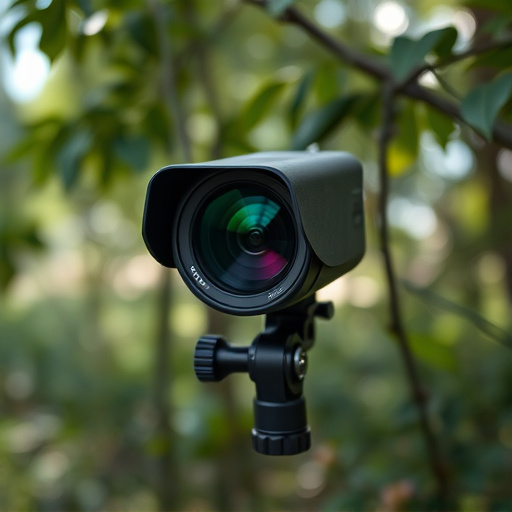
Wireless surveillance systems offer flexibility and convenience for home and business security, with data transmission from sensors/cameras to a hub. Choosing a Dark Room Surveillance Equipment Comparison location balances privacy, security, and acoustics for optimal video quality. Strategically placing cameras and antennas minimizes light reflectivity, improving signal strength and eliminating dead zones. Signal range and obstructions are key factors; high-powered transmitters or repeaters may be needed for robust performance.
Uncover the secrets of wireless surveillance with our comprehensive guide. Learn how to strategically place your equipment for optimal location detection. From understanding intricate surveillance systems to navigating signal strengths and overcoming obstacles, this article has you covered. Explore essential tips for choosing the perfect spots in ‘Dark Room’ setups, featuring an insightful comparison of top-tier surveillance equipment. Elevate your knowledge with our expert advice on enhancing security through precise wireless placement.
- Understanding Wireless Surveillance Systems
- Choosing Location: Factors to Consider
- Dark Room Setup: Equipment Comparison
- Signal Strength: Range and Obstacles
Understanding Wireless Surveillance Systems
Wireless surveillance systems have transformed the way we monitor and secure our spaces, offering flexibility and convenience compared to traditional wired setups. At their core, these systems rely on a network of sensors or cameras that transmit data wirelessly to a central hub or recording device. Understanding how this technology works is crucial for optimizing its performance, especially when comparing dark room surveillance equipment.
When evaluating wireless surveillance options, consider factors like range and signal strength, which can vary significantly between different models. A robust system ensures consistent connectivity, even in challenging environments like dimly lit spaces. Additionally, data transmission rates play a vital role; higher speeds enable clearer video feeds and faster response times. The right equipment can provide a detailed, real-time view of hard-to-reach or obscured areas, making it an invaluable tool for home or business security.
Choosing Location: Factors to Consider
When selecting a location for your wireless surveillance equipment, several crucial factors come into play. One key consideration is privacy and security. The space should offer minimal risks of unauthorized access or disruption, making a dark room an ideal choice due to its inherent seclusion. This is especially relevant when comparing surveillance equipment, as it ensures the integrity of your data and footage.
Additionally, the environment’s acoustics can impact video quality. A quiet, controlled setting like a dark room minimizes echo and background noise, enhancing the clarity of recordings. This consideration is often overlooked but significantly contributes to the overall effectiveness of surveillance systems.
Dark Room Setup: Equipment Comparison
When setting up a wireless surveillance system, one often overlooked yet crucial aspect is the selection and placement of equipment in a dark room. This setup plays a pivotal role in enhancing signal strength, reducing interference, and optimizing overall performance.
A Dark Room Surveillance Equipment Comparison reveals that specialized rooms designed with minimal light reflectivity can significantly improve the effectiveness of wireless devices. In this environment, high-quality cameras and sensors with advanced infrared capabilities excel at capturing clear images and data. Moreover, strategically placed antennas, optimized for frequency bands used by the equipment, ensure robust data transmission and reception, eliminating dead zones or signal dropouts.
Signal Strength: Range and Obstacles
Signal strength plays a crucial role in wireless surveillance equipment, dictating both range and sensitivity. When comparing dark room surveillance equipment, understanding these factors is key. Range refers to how far the signal can travel between the camera/sensor and the receiver, with obstacles like walls, floors, and ceilings significantly impacting this distance. In enclosed spaces, like a dark room, signal degradation from obstacles can be substantial, requiring higher-powered transmitters or closer placement of equipment for optimal performance.
Obstacles also scatter and absorb signals, leading to potential dead zones where reception is weak or non-existent. For efficient surveillance, avoid placing equipment in these areas or consider using repeaters or range extenders to boost signal strength. In terms of dark room surveillance equipment comparison, pay close attention to the maximum range advertised and real-world performance with common obstructions present in such environments.
Wireless surveillance equipment, with its versatility and advanced capabilities, offers a sophisticated way to monitor environments. When setting up your system, understanding the nuances of location selection is key. From signal strength considerations to optimizing dark room setups for enhanced performance, this guide has provided valuable insights. Now, armed with knowledge about range limitations, obstacle mitigation, and the benefits of Dark Room Surveillance Equipment Comparison, you’re ready to deploy a robust wireless surveillance network tailored to your needs.